
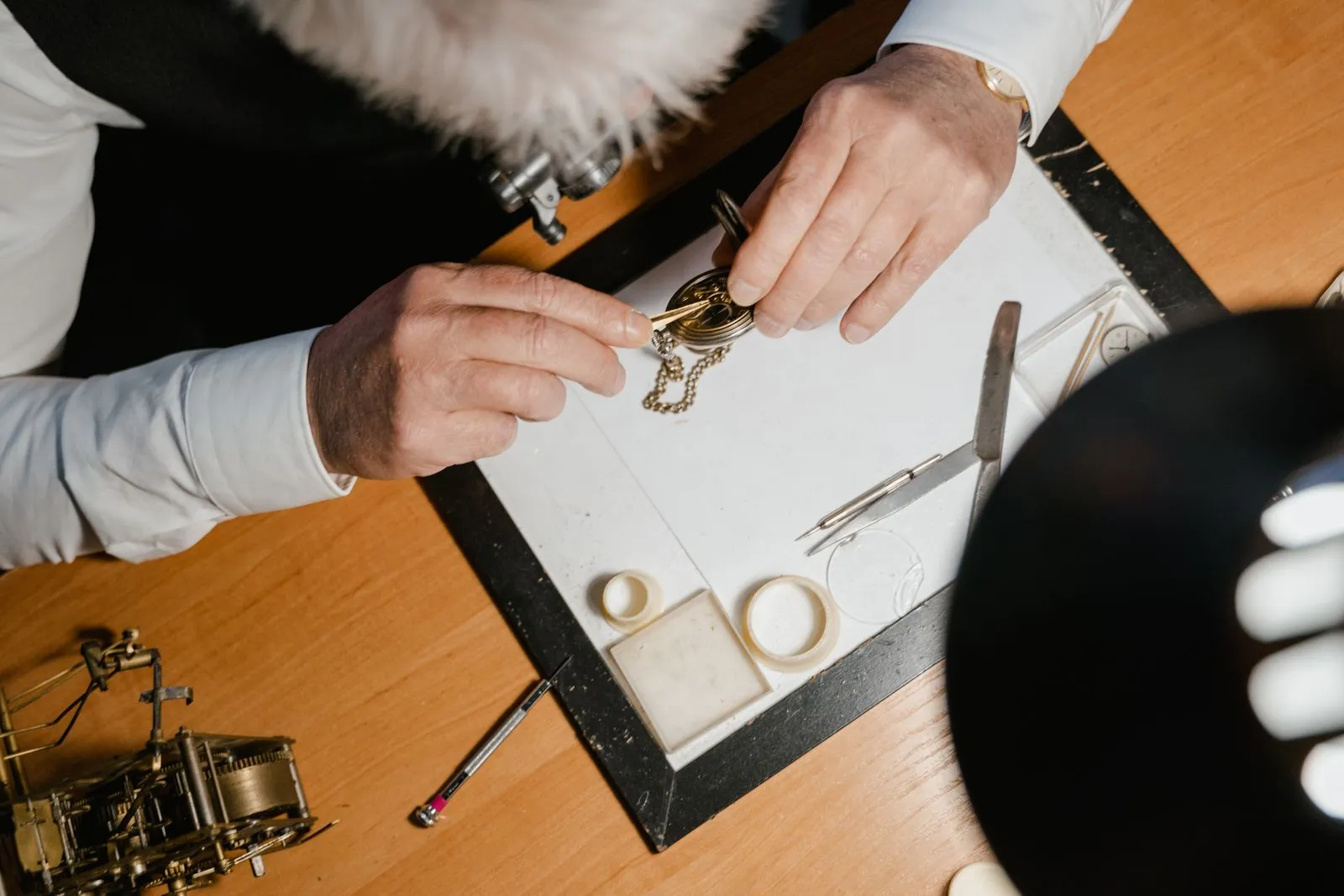
A mechanical watch needs more than an occasional wipe of its case. Inside, moving parts depend on clean surfaces and properly maintained lubrication. The right time for professional cleaning varies by watch, how often you wear it, and what its service records show. Rather than relying on one interval for every timepiece, consider its age, use, condition, and maker’s guidance. These factors can help you decide when to arrange an inspection before wear or a problem affects performance.
What Cleaning Involves
Professional movement cleaning is part of a broader service, not a quick rinse. A watchmaker typically opens the watch, inspects its parts, disassembles the movement, cleans components with appropriate equipment, and checks for wear. The movement is then lubricated and reassembled as needed. Cleaning the outside of the case and bracelet is separate and does not remove debris or old lubricant from inside the movement.
A watchmaker should assess the specific movement before recommending work. Some watches may need replacement parts or other repairs along with cleaning. Water resistance also needs attention if the case is opened; seals can age, and the watch may require testing before it is safe around water again.
How Wear and Use Matter
A watch worn most days experiences ongoing motion, temperature changes, and contact with skin, clothing, and the environment. Dust, moisture, perspiration, and impact can also affect the case or its seals. These conditions do not automatically mean the movement needs cleaning immediately, but they make regular condition checks especially useful.
A watch worn occasionally may face less daily exposure, yet long periods without use do not guarantee that its lubricants remain in good condition. Storage matters: keep the watch in a clean, dry place away from strong magnetic fields and extreme heat. If you wear it during sports, dusty work, or activities around water, tell the watchmaker so they can factor that use into an inspection.
Use Service History as a Guide
Check the service paperwork for the date and scope of the last visit. A note that only records a battery or strap change does not confirm that a mechanical movement was cleaned. If the watch has no service history, its age alone cannot show what condition the movement is in. Ask a qualified watchmaker to inspect it and explain whether cleaning is appropriate.
Follow the watch manufacturer’s maintenance guidance when it is available, and use it as a starting point rather than a guarantee. Different designs, materials, and conditions can call for different care. Keep future service records, including details of movement work, water-resistance checks, and parts replaced. Clear records help the next watchmaker make a more informed recommendation.
Signs to Arrange an Inspection
Pay attention to changes in timekeeping, power reserve, or winding. A watch that suddenly runs much faster or slower, stops unexpectedly, or feels rough when wound deserves an assessment. These symptoms can have several causes, so they do not prove that cleaning alone will solve the problem. Avoid opening the case or adding household oil; either can cause further damage.
Moisture beneath the crystal, a loose crown, or a case that has taken a hard impact calls for prompt professional attention. Until a watchmaker checks it, avoid wearing it near water. For routine care, wipe the exterior with a soft, dry cloth and follow the maker’s instructions. Do not immerse the watch unless its water resistance is confirmed and suitable for that use.
There is no single cleaning interval that suits every mechanical watch. Base the decision on how it is worn, its condition, manufacturer guidance, and documented service history. If records are missing or you notice a change in performance, arrange an inspection and ask what work the movement actually needs. Auckland Watch Care can help you discuss the next step for your watch.